
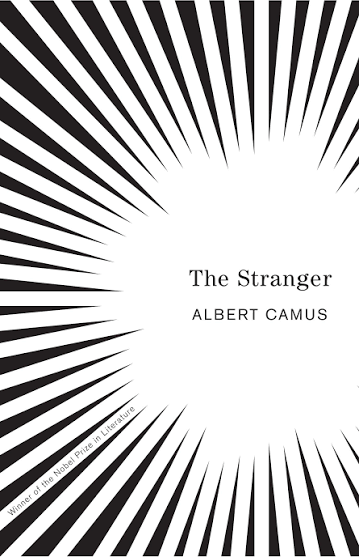
Over the years I have developed a dim view of the how-to, non-fiction and the self-help genres. Literature and philosophy have altogether crawled under my skin and are seeping into my veins. My latest literary escapade has been with Albert Camus’s The Stranger. It is my first with Camus and I must say, it is one of those strange masterpieces that seduces the reader into seeing what they would hope to unsee, but cannot.
The Stranger has a simple and unassuming plot. The book is short, the words are easy, and things seem to just happen until, by inevitably connecting the dots, the reader is caught up in a web of sympathy and indifference. As the reader tries to make head or tail of what’s happening, they get entangled even more to a point of helpless vexation, albeit at nothing apparent. This is an odd portrayal, but accords with Camus’s underlying philosophy — the philosophy of the absurd.
In an earlier work, The Myth of Sisyphus, Camu wants us to think about suicide as the only true philosophical question. Why continue living, when life is but a sea of unreasonable trouble? Many would point to meaning, purpose, God, or simply the will to live. But is this not an injection of meaning into life to make it more bearable? There comes a point when the threads of meaning snap and the nakedness of reality induces the glaring question, “but, why am I even doing this?” And is met with silence rather than reason. Thus we are pressed against the breast of reality, out of which the milk of life refuses to flow.
We look around and see that other creatures are endowed with fur, claws and fangs, and for all we lack in those features, we have reason that prompts us to pry and question and dream and construct even the things seemingly beyond mere survival. We seem to have a window into the primordial and everlasting. But as we push the frontiers of reason we arrive at the unreasonable, at silence, at the absurd. And so it is not from a sea of trouble that the suicide might be impressive; trouble is after all meaningful. But it is in the void; in reckoning with the sea of trouble for no reason; in the unanswered question; in the unscratchable itch!
Camus thus presents Meursault, the main character in The Stranger, as someone whom I think, from the reading, has overcome the absurd. He kind of wafts through life from one event to the next without attachment. He is presented with countless opportunities to get involved in life, but remains aloof. He participates rather than get involved. His mother dies and he observes night vigil but does not weep. Upon return from his mother’s funeral he gets entangled at the loins with a girl whom he finds irresistible, but does not love her. His neighbour, Salamo, beats his dog twice a day on their walks, and Meursault understands the man, understands the dog, but also understands the wrong.
Another one of his neighbours, Raymond, is a pimp, whom everyone finds unseemly. Meursault talks to him in similar monochrome. And when Raymond relays his grievances against his girlfriend whom he wants to beat up for cheating, Meursault gets it. And when Meursault is solicited by Raymond to write a letter, convincing the girlfriend to visit so he could beat her, Meursault write it, not in enthusiastic support, but because he can. And when Raymond gets arrested, Meursault testifies to have him released, again because well; why not?
Raymond and the girl’s brother get into a brawl, with Meursault present, and the brother is beaten up. Before the brawl, Meursault takes Raymond’s gun. The fight ends. They leave. Then Meursault feels like taking a walk, and encounters the beaten bother who pulls a knife at him. Meursault shoots — four times. But all is mechanical with Meursault. There’s no deep tug of meaning and purpose; there’s only life taking place.
Meursault is eventually sentenced to death. His month goes through the motions: he thinks about different kinds of dying. But even at the face of finality, one gets the sense that he continues to waft; he participates because he is alive and he must, but he is not involved.
Camus wants us to see that we do what we do because we find ourselves here with proclivities for pleasure, pain aversion, meaning-making, pattern-matching, but all of it is contingent; there is nothing beyond the song-and-dance and the hum-drum of living. The urge to realise one’s potential, to embody the image of God, to good — all of it is absurd — at least that’s what Camus wants us to see.