We go to war every day —
…against competitors, clients, crises, deadlines, and even their own self-doubt.
Most people fight with emotion.
They swing wildly…
And they lose energy, money, and time —
…because they mistaken movement for strategy.
Sun Tzu warned against this 2,500 years ago.
He said warriors who spend more time calculating and never move until they can ensure a win go into battle already victorious, while those wishful thinkers who act first and then seek victory are doomed to fail.
To this day, great schools like Harvard and the U.S Navy; and leading sports teams, and countless leaders, like Bill Gates, Margaret Thatcher, and even emperors like Napoleon, made Sun Tzu’s Art of War a daily reading ritual. Why?
Even violent drug lords, mafia bosses and terrorists obsess over this little book. Why?
Before I answer that, let me tell you a bit more about the free booklet I promised you above.
I call it The 16 Strategies of Psychological Warfare.
The booklet comes from years of studying books like The Art of War + ancient Indian books (like the Arthashastra) + ancient Japanese books—all on the same subject. Strategy, leadership & power.
You see, during ancient times, these books were kept top secret because they had, and still have, the power to topple Kingdoms. They were only available to royal leaders, their advisors and military generals to prepare and guard against psychological warfare.
In all fairness, the world is infinitely more psychologically violent. Social media. Marketing. Algorithms. AI. All of them are weapons aimed at capturing your most prized possession—your mind. Then there are colleagues, all vying for the same scarce positions.
Now, more than ever, Sun Tzu’s Art of War should be essential reading for anyone hoping to thrive in this fast-paced, highly competitive world.
But there’s a problem…
But even then, it depends, which teacher.
Here’s what I mean (please bear with me here)
The Art of War is a Chinese classic written 2,500 years ago, and it was translated for the first time by a French missionary, Amiot (1772). The first English translation came in 1910 by Giles, vastly different from Amiot. It’s as if they were translating from entirely different original texts. But Why?
Amiot was taken in by the poetry of The Art of War and portrayed Sun Tzu with artistic and esoteric qualities (almost like a magician). He fell into the trap of reading it shallowly. In fact, the title, “The Art of War”, came from French translators. A more accurate translation is “Master Sun’s Military Methods.” Far less dramatic.
We know this today because other texts by ancient Chinese generals of the era have since been discovered by archaeologists, some also titled “Military methods.” For example, Sun Bin’s Military methods—of whom many think descended from Sun Tzu—is another shining example of strategy. Then there is Zhuge Liang’s Military methods. Some scholars think he even surpassed Sun Tzu, since he never lost a battle throughout a lifetime of continuous warfare with some of China’s most famous generals like Cao Cao and Sima Yi. His stories are even featured in Robert Greene’s The 48 Laws of Power — see Law 5.
In contrast, Giles portrayed Sun Tzu as a pragmatic, cunning and sometimes ruthless warlord. You see, Giles wrote when the U.S was in the clutches of an intellectual trend now known as American Pragmatism. So, he injected a militaristic, no-nonsense, kick-the-door-down attitude in his translation.
But both of them were wrong.
It took me eight years to figure this out. To be honest, I stumbled upon it when a Chinese professor, fluent in the language and the culture, explained it. Since then, I have depended on only one translation of Sun Tzu’s Art of War, and I have never seen the book the same again.
This is the translation you will receive when you come to my workshop. (Instructions for joining the workshop are available below)
…but first…
Both the beer-making and whiskey-making processes start the same way. Water and Barley are pounded to release sugars. Then yeast is added and kept in a warm room. As the yeast eats the sugar, it releases alcohol — this is called fermentation. However, the yeast becomes poisoned by the alcohol, which stops the fermentation process. That’s why beer has about 5% alcoholic concentration.
Whiskey includes an extra step. Our ancestors figured out that alcohol boils at 78°C, whereas water boils at 100°C. So, when making Whiskey, the fermented mash is heated, and the alcohol evaporates first, which is captured and cooled. This cooled (or distilled) liquid, with a much higher and purer alcoholic concentration, is the beginning of Whiskey.
Why am I telling you this?
That’s because studying The Art of War is like making Whiskey. Most people read the book, like any other, and get drunk on a shallow 5% understanding.
However, a teacher with distilled knowledge can give you a more potent understanding of the timeless book. Not only will you consume the book, but you will learn to distil its knowledge yourself. You will become a refined strategic thinker, like a fine bottle of Whiskey.
I have a full-day workshop coming up on the 24th of November 2025 (Saturday)—for only 10 students.
You will arrive at 8:00 at a secret location, somewhere in Mulderdrift. You will be surrounded by nature, a river not too far from the conference room, and a space built for deep thinking and relaxation. You will be greeted with a light breakfast and meet your cohort members.
A friend of mine inherited a business some years ago. A successful garden service with 7 teams, maintaining gardens in 15 suburbs. You see, his father, who founded the business, died when my friend was still fairly young—in his mid-twenties. Although he understood the operations, since he worked with his father, he had yet to appreciate strategy.
Of course, I recommended The Art of War. But he thought it was some stupid old book—philosophy, bla bla bla…. How wrong he was!
He didn’t realise that he had to rise to the level of strategist, where operations are only 1 of 5 pieces of the strategy puzzle (according to Sun Tzu). Eventually, his team rebelled against him, he lost a few clients, and the business was bought for next to nothing by a competitor.
Now, I am inviting you to the big table of strategic thinking—the table of kings and emperors. This is an offer to learn in 8 hours what took me 16 years to grasp.
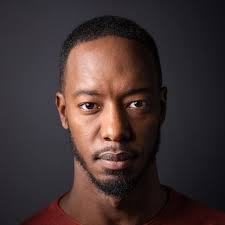
I am Vusi Sindane, an award-winning former corporate executive. I was the Group COO of an investment firm with over 16 companies in Sandton, Johannesburg. I left my executive roles in 2022 and took a sabbatical for a year, cycling 3,257km from Musina to Cape Town to raise money for 10,000 school shoes.
Upon return, I restarted skybookings.com, an events management platform I had started in 2016 before my corporate life. Skybookings is competing with giants, including Computicket, Howler, Webtickets, Ticketpros, and Quicket. However, we are quietly eating into their market share. I will share the strategy behind our growth.
In addition, I am a faculty member at the world-leading Duke Corporate Education, where I lead workshops and training sessions on strategy and ethical leadership at the largest companies in Africa.
My interest in teaching The Art of War is therefore not just a passion, but part of my calling as a teacher, and a tool I have used throughout my career to navigate the sometimes complicated world of business.
STEP 1— Arrange a Free Discover Call: You might have questions before you make the commitment, which is fine. Use the link below to arrange a 15-30-minute discovery call. Even if you do not come to the workshop, booking a no-obligation discovery call will give you instant access to download the Psychological Warfare handbook I promised you earlier.
Step 2—Reserve your seat: A deposit will be required to reserve your seat. Please note that the final booking is made on a first-come-first-served basis. So, even if your seat is reserved, the first one to pay in full gets the final spot. And remember, there are only 12 spots available.
Step 3—Receive your welcome pack: While you wait (assuming it is 7 days before the workshop), you will receive a personalised welcome pack, full of resources to keep you busy.
And now for the price—If you were to invite me to deliver a similar workshop at your company, it would require an investment of R49,999 for the day.
This workshop is R9,999 for two people, and R5,999 for one person, including meals, a beautiful venue and high-quality learning material. It’s a steal. We encourage you to bring a friend because the learning will really begin after the workshop. You will get a lot more from the course in the weeks and months that follow if you bring a friend.
Before you make a booking—
After clicking the red button above, you will be taken to a booking page on my Calendly account.
Enter your name, phone number and email address, then choose a date that best suits you for our phone call. It will be great to have your friend/colleague join us, but this is not necessary.
If you are happy to go ahead, you will receive a payment link to instantly secure your spot. Please note that the button to book a discovery call will automatically deactivate once all spaces are taken.
You should stay at home if…
The funniest part is, this person is happy to subscribe to Netflix and not watch it, or get a gym membership and not go to the gym. They will eat out, have coffee meetings, and might even buy expensive gifts to entertain secret admirers.
But ask them to invest time or money in themselves—they scream like you’ve stabbed them!
So, if you have no time or money to invest in this workshop, this is the very reason you need to do everything you can to come. Strategic thinking solves precisely this problem.
Let me put it to you this way. The death zone on Mt Everest is after climbing 8,000 feet. That’s because the oxygen levels become paper-thin, and it gets hard to breathe, especially when exerting yourself.
This is almost the same as climbing up corporate and entrepreneurial ladders. The higher up you climb, not only is the fall harder, but the complexity and danger increase exponentially. But here this…
Almost everyone today uses oxygen tanks to climb Mt Everest. But one climber, Reynold Messner, in 1978, decided to go without oxygen.
To achieve this all-impossible feat, he allowed his body to acclimatise at each base station. I won’t get into the details here, but when your body notices low oxygen levels for a long time, it compensates by triggering your bone marrow to produce more red blood cells.
In fact, this is how many athletes train—it’s called high-altitude training. This was Reynold’s secret. But it comes at the price of slowing down, as in taking a lot longer.
So, you can be like 99% of the addicts who want quick fixes and are slowly losing their ability to think because of AI, or you can slow down, like Reynold, learn from others, and from your own experience and achieve true mastery.
If you are like Reynold—come! If you’re an AI junky, also come. I will show you how to use it properly.
I have nothing against other “gurus”. If you think you can learn from them, then great. Who am I to argue?
But consider this. You know why Sylvester Stallone has a skewed lip and speaks to the side of his mouth? It’s because his birth was assisted by forceps — a pair of tongs developed back in the 1700s by Peter Chamberlain to help during birth.
Chamberlain kept his tongs top secret—even blindfolding women during birth. With age, he had to pass on the secret to his son, who, likewise, kept the family secret and continued to live like royalty because of it.
But the next generation messed up. Chamberlain III was pressured to reveal the family secret, and he did—but it was a disaster.
During a demonstration, trying to teach others, he fumbled, leading to the death of both the mother and her baby. You see? Not everyone is a teacher. Teaching is a calling. So, good for you if you know a guru.
But wait, why am I sharing the “family secret” and not guarding it like Chamberlain The First?
As I said earlier, teaching is my calling. I thrive on doing deep research, experimenting and then sharing the knowledge with others. I just cannot help it, especially having been in corporate and seeing firsthand that there’s more to life than money.
You should definitely join us if…
Enter your email address below to subscribe.